
Spring Tour 2026 Program Details
Ensemble NOW-Cardelli
Flutist Dr. Conor Nelson and oboist Professor Stephen Key met in the New Orchestra of Washington (NOW) in 2017 and connected as friends and musicians. Prof. Key and pianist Matteo Cardelli met in 2021 at a chamber music festival in Alto Adige and immediately connected as friends and musicians, and have since recorded a Lili Boulanger sond cycle togther with DF Recordings. Matteo along with Giacomo Cardelli, Solo Cello with Teatro La Fenice, are brothers who frequently perform as “Duo Cardelli.” Ensemble NOW-Cardelli was self-formed to bring together these phenomenal world-class musicians with shared artistic values in their first international collaboration.
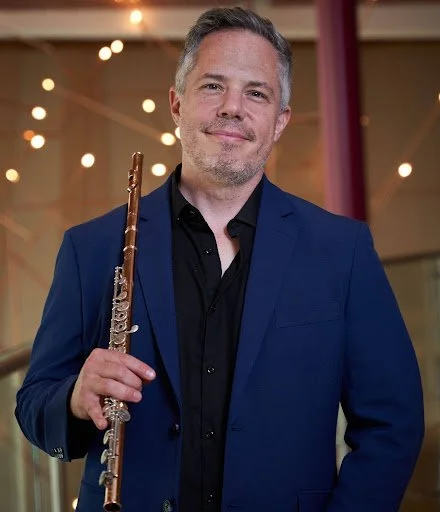
Conor Nelson, flute
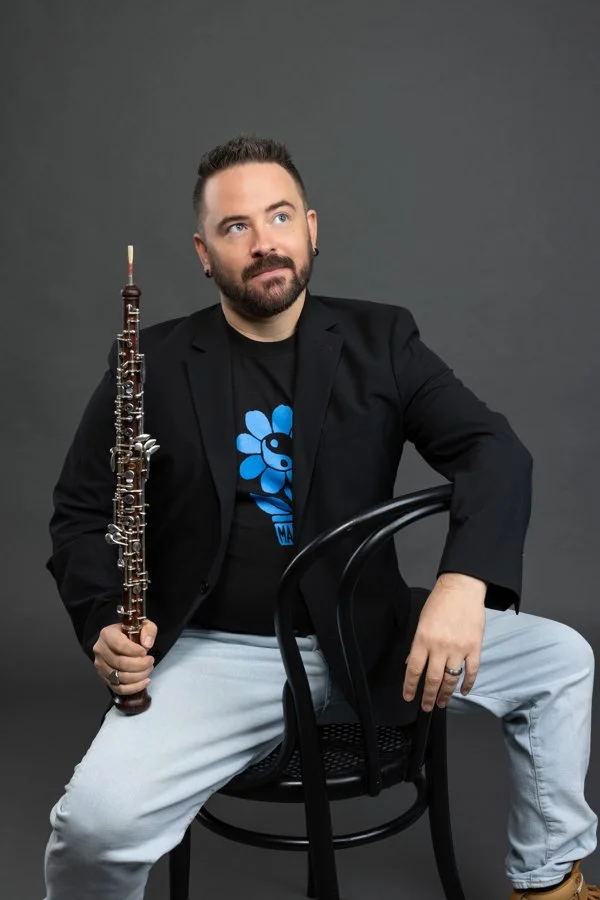
Stephen Key, oboe
Matteo Cardelli, piano
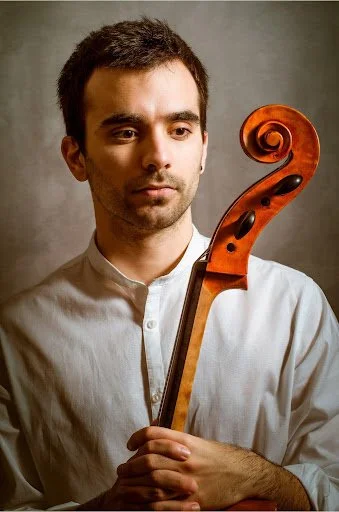
Giacomo Cardelli, cello
Performance Locations/Times
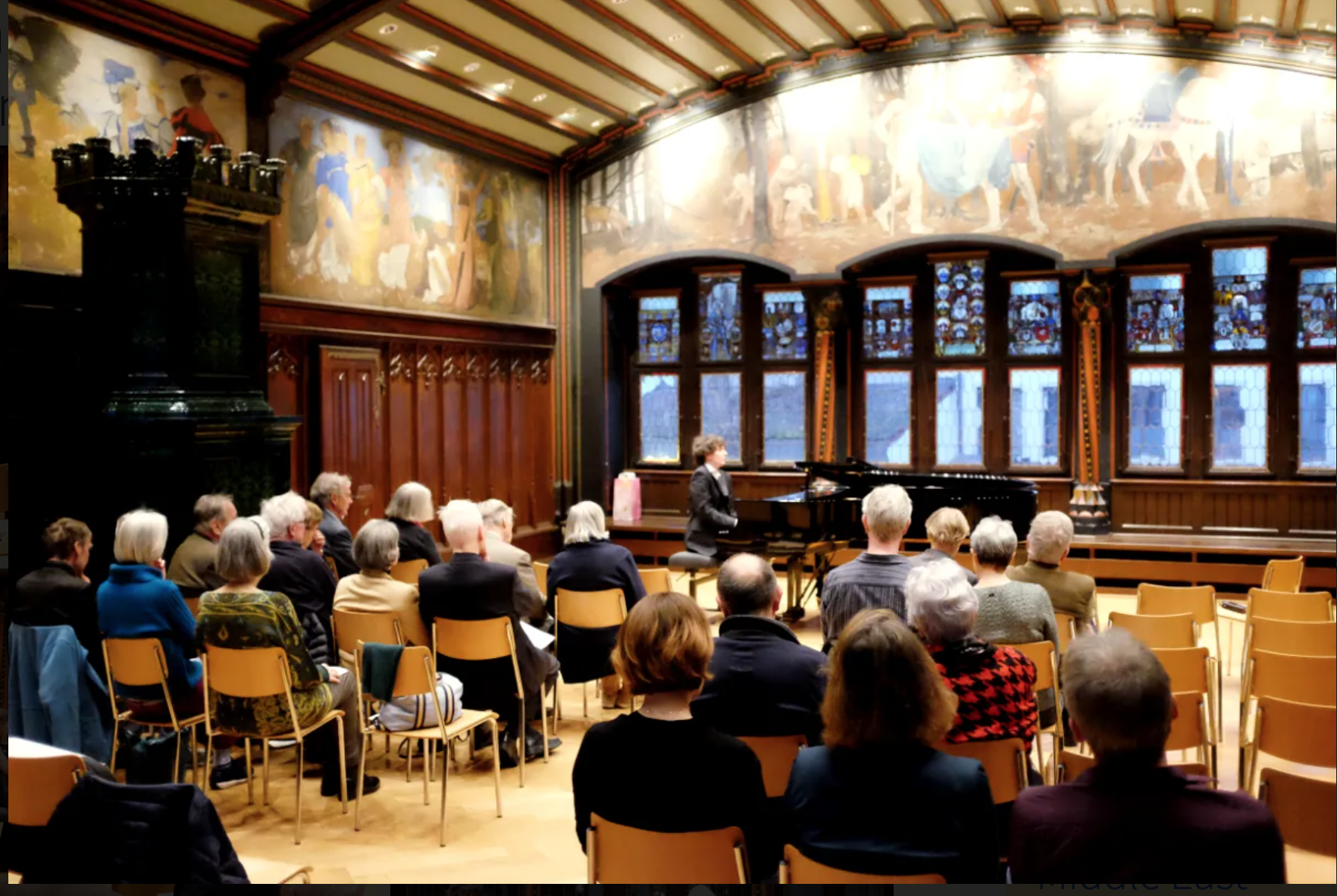
Basel, Switzerland
Thursday 21 May 2026 - 19:00h
Zunftsaal Schmiedenhof
Rümelinsplatz 4, Parterre 4001, Basel
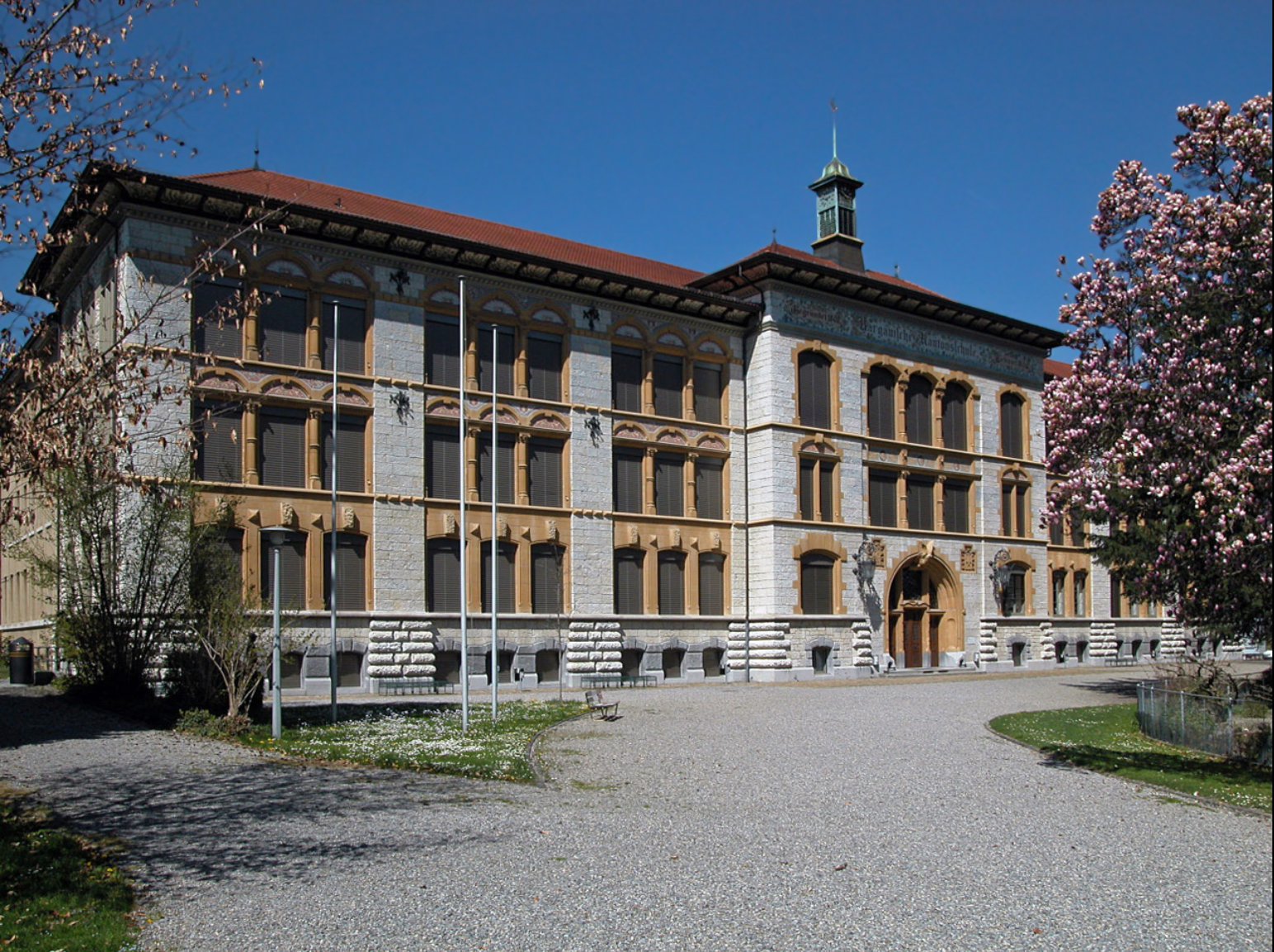
Aarau, Switzerland
Friday 22 May 2026 - 19:00h
Alte Kantonsschule: Aula Bahnhofstrasse 91
5001, Aarau
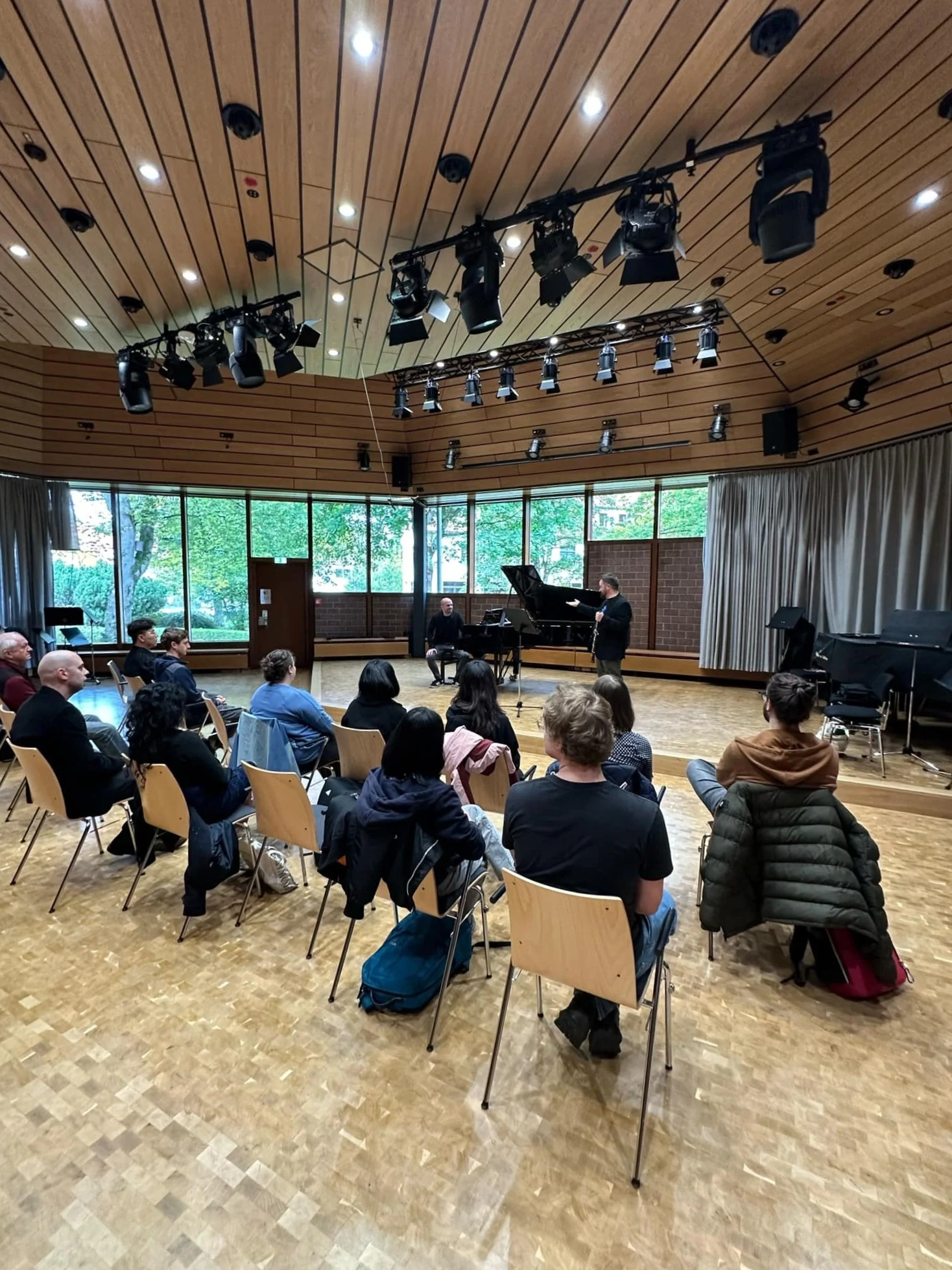
Trossingen, Germany
Saturday 23 May 2026 - 12:30h
Höchschule für Musik: Kleine Aula Schultheiß-Koch-Platz 3
78647 Trossingen
Concert Program:
Trio for Flute, Oboe, and Piano (Madeleine Dring, 1923-1977)
I. Allegro con brio
II. Andante semplice
III. Allegro giocoso
Drei Romanzen No. 1 für Cello und Klavier (Clara Schumann, 1819-1896)
Assobio a Játo, W493; The Jet Whistle (Heitor Villa-Lobos, 1886-1959)
I. Alegro non troppo
II. Adagio
III. Vivo
Nocturne pour Violoncello et Piano (Lili Boulanger, 1893-1918)
Trio for Oboe, Cello, and Piano Hymn to a Better World (Stephen Key, b. 1981)
I. Chanson
II. Hymne à un monde meilleur
III. Burlesque Extatique
Program Notes
-
Multi-faceted artist Madeleine Dring (1923-1977) was an English actress, mime, cartoonist, violinist, pianist, singer, and composer. She earned a violin scholarship to the junior department of the Royal College of Music (RCM), and she continued her studies at RCM as a senior composition student of Ralph Vaughan Williams and Gordon Jacob. In addition to composing concert pieces, Dring sustained her love of the theater by acting, singing, playing piano, and composing incidental music.
Dring composed several of her chamber works, including the Trio for flute, oboe, and piano (1968) for her husband Roger Lord, a professional oboist who played with the London Symphony Orchestra. Flutist Peter Lloyd, Lord, and André Previn premiered the Trio in the United States. Dring admired Francis Poulenc, and her works often exhibit similarities in melodic structure and rhythmic wit.
Poulenc’s influence is clearly heard in the Trio. The first movement consists of mainly homorhythmic lines between the flute and oboe, though cheeky mixed meter passages elude a strong rhythmic pulse. The beautiful melodic simplicity of the second movement is reminiscent of the second movement of the Poulenc Flute Sonata, containing solo passages for both the flute and the oboe as well as melodic lines that interact conversationally. The similarities to the Poulenc Flute Sonata continue in the third movement of Dring’s Trio as both exhibit an energetic brilliance. The piece concludes with a double cadenza and an exuberant ensemble finish.
-
One of the most celebrated pianists of the 1800s was Clara Wieck Schumann (1819-1896). Women concert soloists were somewhat rare during her early lifetime, but she won her fame by her dazzling yet heartfelt performances. Her father Friedrich was her teacher not only for the piano but also in the rudiments of composition, which she worked at joyfully from an early age.
A lodger at the Wieck household (and also a student of Friedrich) during the 1830s was Robert Schumann. Clara and Robert fell in love and wished to marry. However, Clara’s father exercised his right (under German law at that time) as Clara’s “owner,” and refused to give his consent. Clara and Robert took him to court over the matter in 1840 and won. They were married that year. The Schumanns had eight children, but Clara continued to perform, teach, and compose as much as her time allowed. Robert found employment at first in Leipzig, then in Dresden, and finally in Dusseldorf
Robert suffered from what is now believed to have been Manic-Depressive Disorder. It worsened in the early 1850s. In 1854, he attempted suicide and was placed in a sanatorium until his death in 1856. From that period until near the end of her life, Clara Schumann worked unceasingly to support her children. Performances and tours took first consideration, including concertos (notably her own piano concerto) and recitals ̶ both solo and duo. One of her closest collaborators was Josef Joachim, perhaps the most celebrated violinists of his day.
Clara composed very little after her husband’s death, and the Three Romances, Op. 22, written between 1853 and 1855, was one of her last works. She dedicated the set to Joachim, who wrote to her, calling them “a sheer delight to play, marvelous and heavenly.”
In Clara’s century, the “romance” was a genre of “character piece,” a short instrumental piece conveying one or more moods or emotions. In the Op. 22 romances, Clara does not identify such specifics in the first two, but merely gives us generic tempo markings (Andante molto and Allegretto). For the final Romance, however, the tempo marking is Leidenschaftlich Schnell: “Passionately fast.”
Andante Molto. A wistful beginning and ending frames a more fervent center, painted with broad strokes. The piano part is amazing for its dual role of accompaniment to the violin and soloist with engaging melodic ideas.
-
Brazilian composer Heitor Villa-Lobos was part of a generation of Latin-American composers who delved deeply into their country’s histories and folklores to find a specifically national musical voice. (Carlos Chávez, Alberto Ginastera, and, to a lesser extent, Silvestre Revueltas were also part of this cohort.) As a child, Villa-Lobos learned to play the cello and the clarinet from his father, an amateur musician who died when Heitor was eleven. Uninterested in pursuing a formal musical education, Villa-Lobos instead taught himself guitar and started playing in a street band in Rio de Janeiro. At sixteen, he joined a theater orchestra as a cellist and also played in a cinema orchestra, immersing himself in popular music and music theater for two years.
At eighteen, Villa-Lobos set out for Brazil’s interior. He spent the next decade traveling extensively exploring the Amazon and encountering the rich folk music traditions of his country. The five years that followed were a period of intense creativity and also witnessed the affirmation of Villa-Lobos’ reputation as Brazilian classical music’s leading new voice. Concerts of his music were met with scathing reviews from reactionary, old-guard critics, which only increased interest in his music. In 1923, after participating the year before as music’s representative in Brazil’s “Week of Modern Art,” Villa-Lobos went to Paris with the help of several influential friends and a government stipend. There, he met Stravinsky, Ravel, Prokofiev, and Varèse and achieved a level of acclaim won by no other Latin-American composer in Europe before or since. When he returned for good to Brazil in 1930, he was Brazilian music’s leading figure and a celebrity in international music circles.
Villa-Lobos never forgot his “musical education” – the Rio street bands, the trips to the Amazon, and the music of the movie halls and theaters of his teen-age years. He fused these diverse influences into a powerfully nationalist musical voice.
Villa-Lobos composed Assobio a Jato (The Jet Whistle) in New York in 1950. The composer named his work to describe the technique he calls on the flutist to use during its last movement. To produce the effect, the player blows directly and forcefully into the flute with his or her mouth almost covering the mouthpiece. Combined with a glissando, the resulting whistle sounds like a jet taking off.
This finale is preceded by an opening Allegro non troppo, where the cellist and flutist alternate between one playing a folk-like melody while the other accompanies insistently, and a lyrical Adagio slow movement.
-
Context
Born on 21st August 1893 in Paris, Lili Boulanger was considered at a young age as a musical child prodigy. This was perhaps not too surprising for the Boulanger family, with her mother and grandmother being singers, her elder sister Nadia being a composer and educator, and her father, Ernest, also working as a composer. It became apparent as early as two years old that Lili had perfect pitch, therefore her parents supported her musical studies.Boulanger was very close to her father, who passed away when she was six years old. It is suggested that many of her works touch on themes of grief, as she was greatly affected by his passing. Music was therefore a central part of the Boulanger household, and Lili Boulanger thrived in this sort of setting.
After battling poor health from the age of two (which stayed with her the rest of her life), the young aspiring composer attended music classes with her sister at the Paris Music Academy when she was well enough. From there, Boulanger began taking classes in music theory and she also began studying organ performance with Louis Vierne.
Boulanger also became proficient at playing the piano, violin, cello, harp, as well as being a good singer, and she subsequently was educated by the likes of Marcel Tournier and Alphonse Hasselmans. She became so absorbed in music, having lessons 7 days a week, that she rapidly improved and gained entry into the prestigious Paris Conservatoire in 1912, to study composition.
In 1912, Boulanger competed for the prestigious Prix de Rome prize, but halfway through her performance she collapsed. A year later she entered again and won the composition prize for her cantata Faust et Hélène, making her the first woman composer to win this prize. Winning the Prix de Rome gained Boulanger a five year international scholarship, which put her at the centre of the French music scene at the time.
Boulanger became a student under her sister Nadia Boulanger, and French composer Gabriel Fauré. Soon after winning the composition prize, Boulanger was offered a contract with publishing company, Ricordi, which gave her a fixed salary, as well as the publication safety so she could distribute her works abroad.
Boulanger’s life and work were consistently troubled by her chronic illness, which began as bronchial pneumonia, and formed into crohn’s disease – which ended her life in March 1918. Although she enjoyed travelling, Boulanger was often forced to cut trips short. For example, soon after going to Rome in 1914 to compose, she returned home to help her sister support French soldiers after WWI had broken out. In 1916, she was told she had two years to live, and in this time Lili was incredibly creative, as she rushed to complete the works she had already started. Compositions such as Pie Jesu (1918), Vieille prière bouddhique (1917) and D’un matin de printemps (1918) were completed by the time she passed, however her opera La Princesse Maleine remained uncompleted.
The Music
Nocturne was composed in 1911, and was originally scored for solo violin and piano accompaniment. As the title suggests, the night time was the basis and inspiration for this short work for violin. Opening with a sparkle of notes from the piano, the violin enters with the primary melody. The sparse accompaniment leaves room for the rich violin to sit on top. As the violin becomes slightly more agitated in the climactic sections, the accompaniment becomes louder and to support the soloist.
The melodies are charming, but also troubled in Nocturne. At one point the music is ambling along and the next the intensity has soared, and so has the violin. These nuggets of intensity and drama really shape the structure and voice of this piece. The opening piano statement lays at the core of the accompaniment, with the piano moving with the soloist when necessary. The end of Nocturne sees the two instruments become entangled as the music becomes quieter until it softly fades away.
-
This trio was originally conceived as music to play with my friends; specifically the pianist, Matteo Cardelli. Several years ago when we met in the Süd Tirol region, we got along so well both personally and artistically while also surrounded by some of the most beautiful nature in the world. I was inspired to write this piece. At the same time, I was listening to a lot of Messiaen and Lili Boulanger, two of my favorite composers.
The first movement begins as a reflection on the beautiful landscape of Alto Adige and friendship while very much paying homage to my love of French music. All of the movements are intentionally named in French as a nod to this. Being from the United States, there is a fair amount of Jazz and Minimalist language as well.
While finishing up the first movement, the war in Ukraine had begun, and it really put me in a bad place. Being an international musician, I have many friends and colleagues from these countries and I needed to put my feelings of despair into something: the harmonic structure of the second movement was written that week. I knew I wanted a feeling of hope to come from all this, so it transitions from more amorphous and dissonant harmony to nearly overly sentimental by the movement’s end.
The Burleque Extatique is exactly what it sounds like. In my mind, this is the celebration we could all hope to have in a theoretical better world where all can come together in revelry. This is by far the most technically demanding movement for all three instrumentalists, and also the most demanding for energy. Inasmuch, I have an instruction in the last ten bars to play “without any reservation, with reckless abandon.”
What would we do if we did not feel inhibited to be ourselves? This is the joy and ecstasy I wish to express at the end of my Trio. Thank you for joining the Swiss and German premieres of this work!